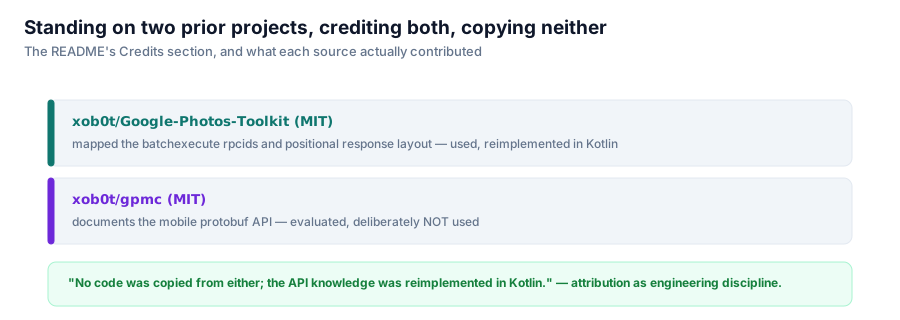
open-source Standing on Shoulders, Ethically: Crediting Prior Reverse-Engineering Work The batchexecute rpcids this app relies on were mapped by someone else's open-source project first. No code was copied, but the knowledge came from somewhere — and the README says exactly where.
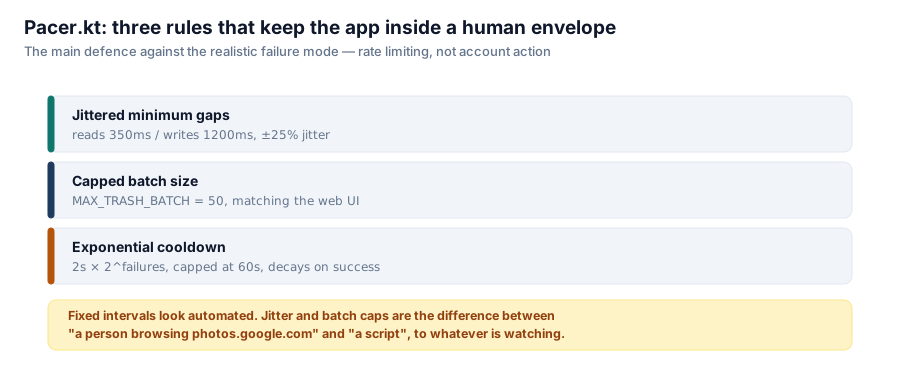
android Rate-Limiting Yourself Before Google Does It For You Pacer.kt exists for one reason: keep this app's request pattern inside the envelope a real person browsing photos.google.com would produce. Jittered gaps, capped batches, and an exponential cooldown that only decays on success.
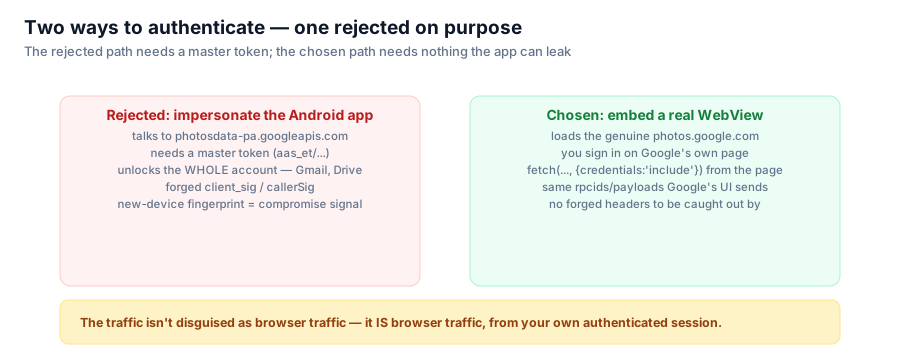
android The API I Didn't Use, and Why: WebView vs Impersonating the Android App Two ways to talk to Google Photos' private API: forge the Android app's own requests with a master token, or embed a real browser and let the page make the calls. Only one of them is a credential you'd want on a phone.
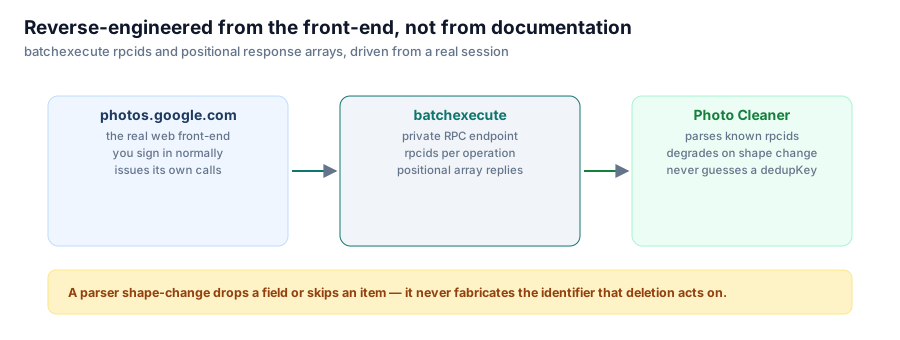
android Reverse-Engineering Google's Private batchexecute API How Photo Cleaner actually deletes photos: the same undocumented rpcid-based RPC endpoint photos.google.com's own front-end uses, driven from a real browser session.
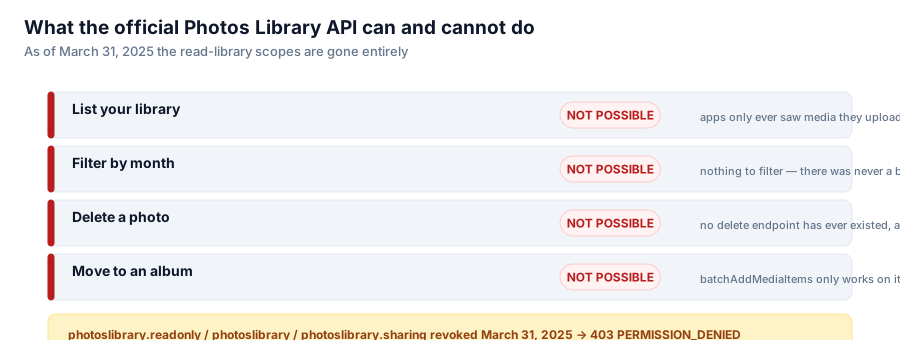
android There Is No Official Delete API for Google Photos The Photos Library API never had a delete endpoint, and on March 31, 2025 Google revoked the read-library scopes too — closing the loop entirely.